
BOOKS
Leadership/Communication
Scroll down to read more about the books

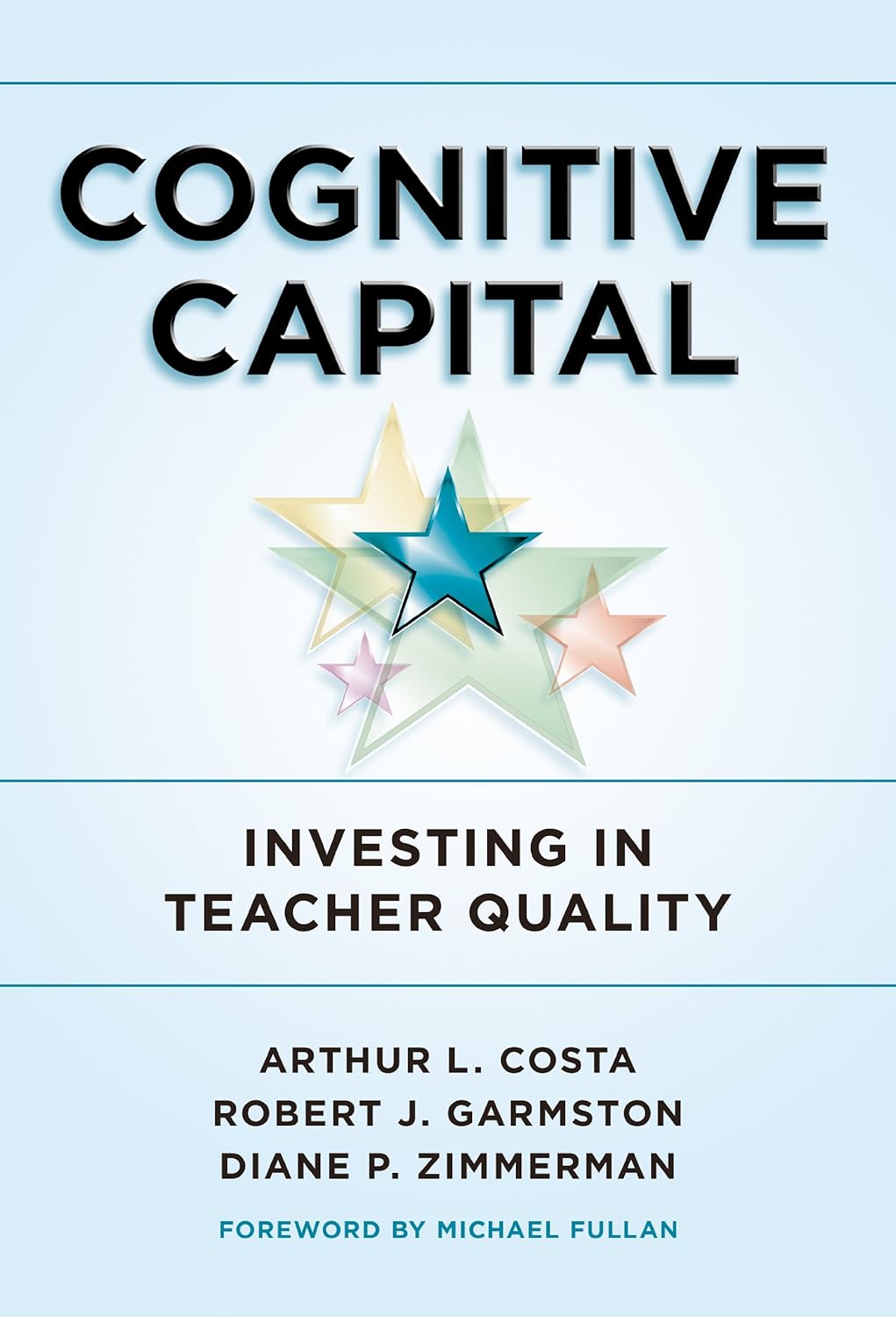
A Leadership Advantage: Building Cognitive Capital
Cognitive Capital: Investing in Teacher Quality (co-authored by Diane P. Zimmerman along with Arthur Costa and Robert Garmston) argues that the most valuable resource in education is not standardized systems or external accountability measures, but the cognitive capacity of teachers—their ability to think, reflect, make judgments, and continuously improve their practice. The book builds on the concept of cognitive coaching, emphasizing that effective teaching arises when educators integrate their internal knowledge and experience with external standards, becoming more self-directed and confident in their decision-making.
Zimmerman and her co-authors advocate for leadership approaches that develop this “cognitive capital” by engaging teachers in reflective dialogue rather than top-down evaluation. They highlight key mental dispositions—such as efficacy, flexibility, consciousness, craftsmanship, and interdependence—as essential for professional growth and collaboration. Ultimately, the book presents a shift away from compliance-driven models toward a culture of inquiry and collective learning, arguing that investing in teachers’ thinking leads to stronger schools and a greater sense of professionalism.
Customer Review
⭐⭐⭐⭐⭐
As a Cognitive Coach and a member of the Community of trainers, I anticipated that I would like this book and not encounter much new information. Having read both editions of Cognitive Coaching: A Foundation for Renaissance Schools, I felt I would be familiar with most of what Costa, Garmston and Zimmerman would say. When I read Fullan’s foreword, I thought to myself, “Of course you’re impressed–unlike me, you probably don’t know how impactful the Cognitive Coaching and Adaptive Schools work is. Well, I AM impressed! “Old knowledge” is skillfully integrated and updated and “new knowledge” is added. In my opinion, this is seminal work about teacher effectiveness. Thank you for your thoughtful and meaningful voices. – Jane Ellison, Executive Co-Director Cognitive Coaching
Prepublication Review
In contrast to the persistent trend of simplifying teaching via reductive evaluation tools, Costa, Garmston, and Zimmerman dive fearlessly into its complexities. Cultivating ‘cognitive capital’ is a refreshing new direction for educators to embrace. The ideas and recommended actions in this fascinating book support a culture of thoughtful innovation which develops mindful and resourceful professionals. The contemporary learners in our classrooms need nothing less. – Heidi Hayes Jacobs, president, Curriculum Designers
Prepublication Review
The authors have positioned ‘cognitive capital’ at the center of understanding and developing teacher quality and have succeeded brilliantly. What I especially like about Cognitive Capital is that the case made by the authors directly and indirectly destroys any notions of superficial accountability that abound in current policies at state and federal levels. There is a great discussion of prescriptions vs. accountable dialogue. The final chapter of the book, Auditing: Promoting Systems Accountability, contains a practical theory of development in its own right. Cognitive capital as a system asset that builds talent optimization and career ladders that support fundamental and continuous learning in the profession. This book puts coaching in a new, more profound light. Coaching is still at the core of the authors’ theory and practice, but now we see it as a system resource. To read the first few pages of this book is to instantly appreciate it; to read it through is to become a better change agent whatever our role in the education system. – Michael Fullan Co-Director of New Pedagogies for Deep Learning
Story from the Book: Promoting Learning Agility
The authors state that personal agility is a defining benchmark for beginning teachers. Diane explains, she did not expect beginning teachers to be perfect; however, she did observe to see if they accepted responsibility and demonstrated personal agility—the ability to adapt when faced with challenges. It is much easier to supervise a professional who had thought about the problem and already has thought of solutions than one who blames the students or parents. Reflecting on her career Diane realized, “Personal agility was easy for principals to observe. Principals, teachers, and students interact daily around problems. When personal agility is present problems resolve–sometimes in surprising ways.
Personal Agility as Noted by a Student
Surprisingly, even students could observe the difference! Diane remembers being in a tough spot with a new teacher who had admitted to swearing during a tense moment with a student. Understandably, the mother of the 6th grade boy was upset. The deal maker was the teacher’s honesty; the teacher had reached out to the mother immediately after the incident to apologize and suggest they meet. The boy finally calmed his mother down when he said, “In my old school the teacher would have lied. In this school they tell the truth.” From this one comment, the conversation shifted to how adults become role models for student through ethical, congruent actions. The teacher, the student, the parent had learned a valuable lesson about learning from mistakes—learning agility. That teacher went on to become an administrator, and the boy who had struggled in his other school had a wonderful 6th grade year. He knew he could trust both his teacher and his principal; this demonstrated the power of the teachable moment, which is learning agility at its best. (p.94)
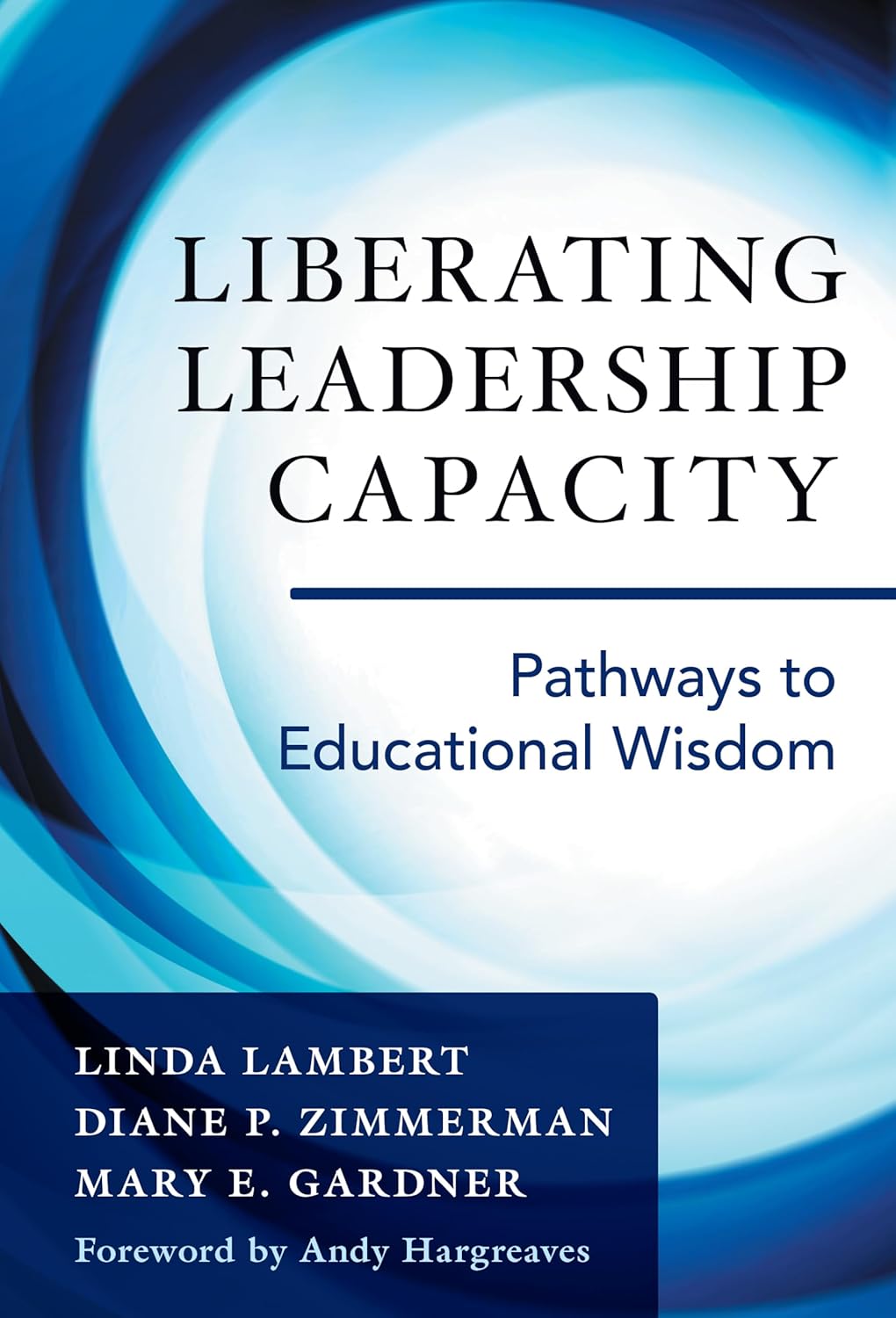
The Capacity to Engage in Educational Improvement
During the past quarter century, conceptions of leadership have evolved in concert with breakthrough discoveries in science and generative learning. Liberating Leadership Capacity captures these new ideas through the integration of the authors’ earlier works in constructivist leadership and leadership capacity. What emerges is a pathway through which educators can become the primary designers of their own learning and that of their students, thus creating sustainable systems of high leadership capacity. This vision of leadership reframes professional learning designs and knowledge creation, describing how these ideas are richly manifested in local, national, and international programs. The context is democratic communities; the learning is constructivist; the leadership is shared. The result is wise schools, organizations, and societies.
Prepublication Review
What could be a more worthy goal than creating wise schools? Liberating Leadership Capacity strikes a chord with those who believe that education is more than a series of tasks and tests, and that curiosity, wonder, and emerging leadership should define the experiences of students and teachers alike.” – Deborah Walker, president and CEO, Collaborative for Teaching and Learning (CTL)
Prepublication Review
What could be a more worthy goal than creating wise schools? Liberating Leadership Capacity strikes a chord with those who believe that education is more than a series of tasks and tests, and that curiosity, wonder, and emerging leadership should define the experiences of students and teachers alike.” – Deborah Walker, president and CEO, Collaborative for Teaching and Learning (CTL)
Prepublication Review
In Liberating Leadership Capacity, a compelling driving concept is that ‘leadership capacities are present in the room.’ The authors describe organizational conditions that promote skillful dialogue, continual learning, building trust, and sharing a common vision among members. In such schools teachers become the leaders of learning and students become the leaders of the future. – Arthur L. Costa, professor emeritus, California State University, Sacramento
Story from the Book: Becoming Inquiring Leaders
In Washoe County, Nevada, the mandate was clear; implement the Common Core State Standards. Under the leadership of Aaron Grossman, a teacher appointed on special assignment to lead this charge, the teachers learned how to become inquiring leaders. Coming from a teaching perspective, Grossman was not interested in giving answers, but rather in finding forums for inviting teachers to find their own answers. Early in the process he struggled; he found that discussion about the standards were un-necessarily challenging. Grossman felt strongly that the questions arising in the debates of the CCSS needed to be answered by the teachers who were posing the questions; they needed to inquire themselves. To jump-start the process, he went directly to the source via the Internet and provided unfiltered information so the teachers could review the rationale for the standards and arrive at their own interpretations. The process led the teachers to take responsibility for experimenting with what they were learning about the CCSS. As they reflected and dialogued together the standards took on new meanings. These small studies grew into “Core Practices” which they posted on the Inernet. When answers could not be found, the group reached out and created a network with the coauthors of the literacy standards, David and Merideth Liben. Soon the group was collaborating with the Libens to create short videos to be used by other teachers…..Grossman reflected on how this initiative expanded through teacher networking, and soon the collaborators grew to more than 1,000 teachers. Together they all developed an online repository to collect teacher resources and lesson plans to support the Core Practices. (p.96)

Conversations Strengthen Leadership
Nine Professional Conversations to Change Our Schools by William A. Sommers and Diane P. Zimmerman focuses on improving schools by strengthening how educators communicate and collaborate. The authors argue that many problems in education—such as inconsistent teaching practices and lack of shared knowledge—stem from weak or ineffective professional conversations. They introduce a structured framework of nine types of conversations (like reflective dialogue, coaching, and conflict resolution) designed to build “collective efficacy,” meaning a shared belief among educators that they can improve student outcomes together.
The book emphasizes that meaningful, face-to-face dialogue is essential for building strong relationships, aligning goals, and improving teaching practices. Each conversation model provides practical strategies and examples showing how educators can move from simple discussion to deeper collaboration and problem-solving. A key tool in the book is the “Conversational Dashboard,” which helps educators choose the right type of conversation depending on the situation. Overall, Sommers and Zimmerman argue that sustainable school improvement comes not from top-down reforms, but from intentional, skillful communication that builds trust, shared knowledge, and continuous learning within schools.
Prepublication Review
Sommers and Zimmerman are not the first to enter the field of professional conversations, indeed they draw from many experts. They draw from advocates of reflective or mindful conversations that draw people out, encourage them to explore key problems and dilemmas, listen respectfully to others, and eventually determine solutions together. They take a fresh look at ways to handle difficult challenging or hard conversations; coach educators and leaders about how to talk tough; and raise difficult subjects in a respectful but nonetheless clear and direct way about underperformance or insufficiently high expectations…. In a wider community of educators, advocates of these approaches often fall into separate camps—supportive, challenging, or clinically evidence driven. This book brings them all together. They are complementary skill sets, not competing ones, each having a time and place and needing to belong to a wider repertoire on which leaders, colleagues, consultants, and staff developers can draw at any time. In clear language and building on their years of experience as highly effective leaders in education, the authors take the reader through these different approaches, show them what they look like and what impact they can have, and provide very clear tools an protocols along with illustrative examples that will help teacher leaders and schools leader put them together. – Andy Hargreaves, Research Professor Boston College
Customer Review
⭐⭐⭐⭐⭐
9 Professional Conversations to Change Our Schools by Bill Sommers and Diane Zimmerman offers education leaders a dashboard of options for having conversations designed to grow collective efficacy in schools. The nine conversations drawn from the work of leadership experts inside and outside the education world, are arranged in a continuum from most reflective and open-ended to most directive and closed. Each of the conversations is based in a growth mindset and is intended to support professional learning and tap into the internal resources of those who are part of the school community. The book is a rich but practical resource for both formal and informal school leaders. Principals and teachers will find it easy to zoom in on conversation protocols suited to specific contexts and needs. They will also find this book useful in strengthening communication skills and building a repertoire of strategies for supporting others as learners. – SC
Story from the Book: Stop Telling, Start Asking
Another barrier to Humble Inquiry is what Schein calls the “culture of TELL.” We expect our leaders to be knowledgeable, and they want to be perceived in that way. As a result, the fall back into the “telling” trap, and the culture becomes dependent on the knowledge of a few. People also quit thinking on their own because the answer will be forthcoming from the person with the professional power. Knowing the answer, or certainty, is a trap that devalues the use of inquiry. Indeed, inquiry and telling behaviors are diametrically opposing concepts. As Shein reminds us, when appointed leaders are not careful, they offer help that is not desired or useful. Instead, the goal of the consultant should always be first and foremost to find out what is on the group’s mind—what are the issues they are dealing with, and what support do they need to move forward to make the situation better? When Schein stopped telling and started asking, he discovered that most people could solve their own problems. (pp. 79-80)